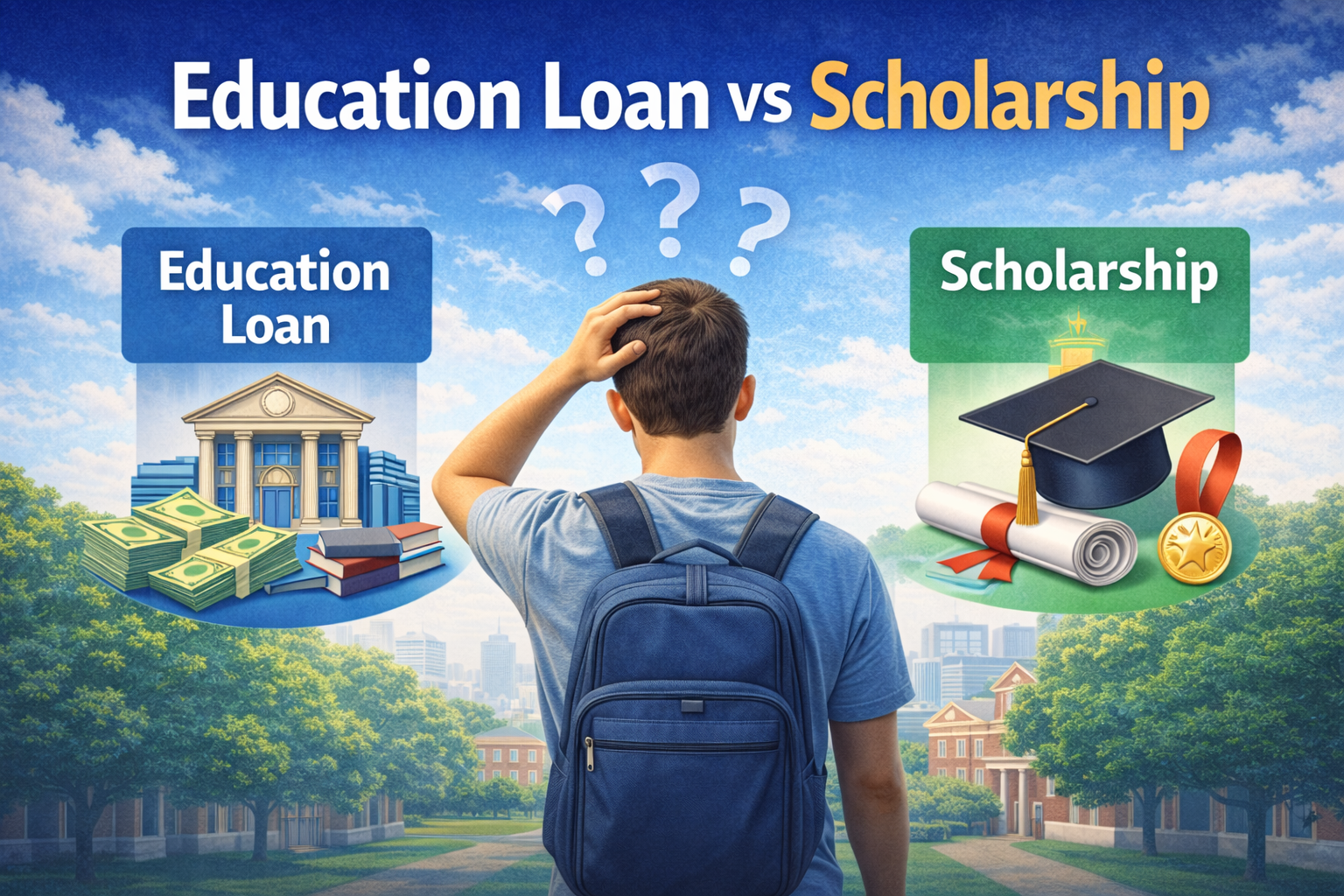
Choosing how to finance higher education is one of the most critical decisions for students and parents today. With rising tuition fees, accommodation costs, and living expenses, many students face a tough choice between education loans and scholarships.
Both options have advantages and drawbacks, and the “better” choice depends on your financial situation, academic profile, career goals, and long-term plans.
In this detailed guide, we will compare Education Loan vs Scholarship, explain how each works, list their pros and cons, and help you decide which option is best for your education journey in 2025.
What Is an Education Loan?
An education loan is a borrowed amount of money provided by banks, NBFCs, or government institutions to fund your studies. The student must repay this loan after completing education, usually with interest.
Common Expenses Covered by Education Loans
- Tuition fees
- Hostel or accommodation charges
- Books and study materials
- Laptop and equipment
- Travel expenses (for abroad studies)
- Insurance and examination fees
Types of Education Loans
- Domestic Education Loan – For studies within your country
- International Education Loan – For studying abroad
- Government-Sponsored Education Loan – With subsidies or lower interest
- Private Bank or NBFC Loan – Faster processing but higher interest
What Is a Scholarship?
A scholarship is financial aid awarded to students based on merit, financial need, talent, community background, or specific criteria. Unlike loans, scholarships do not need to be repaid.
Types of Scholarships
- Merit-based scholarships
- Need-based scholarships
- Government scholarships
- University scholarships
- Private & NGO scholarships
- Country-specific international scholarships
Scholarships may cover full tuition, partial fees, or include monthly stipends and living expenses.
Education Loan vs Scholarship: Key Differences
| Feature | Education Loan | Scholarship |
|---|---|---|
| Repayment | Must be repaid | No repayment |
| Interest | Yes | No |
| Availability | Easier to get | Highly competitive |
| Coverage | High amount possible | Limited or fixed |
| Eligibility | Income + admission based | Merit/criteria based |
| Financial Risk | High | Zero |
| Long-term impact | Debt burden | Financial freedom |
Advantages of Education Loans
1. Easy Access to Large Funds
Education loans can cover high tuition fees, especially for professional and international courses like MBA, MS, MBBS, or Engineering.
2. Wide Course & University Coverage
Loans are available for most recognized universities and programs worldwide.
3. No Immediate Repayment
Most loans offer a moratorium period, meaning repayment starts after course completion.
4. Tax Benefits
In many countries, interest paid on education loans is eligible for tax deductions.
5. No Academic Restriction
Even average students can get loans if they secure admission to a recognized institution.
Disadvantages of Education Loans
1. Debt After Graduation
Students start their careers with a financial burden, which can cause stress.
2. Interest Accumulation
Interest continues to add up during study and moratorium periods.
3. Pressure to Get a High-Paying Job
Loan repayment may limit career choices or force students into high-paying roles.
4. Collateral Requirement
Large loan amounts often require property or third-party guarantees.
Advantages of Scholarships
1. No Repayment Required
Scholarships are essentially free money for education.
2. Zero Financial Stress
Students can focus fully on academics without worrying about future debt.
3. Prestige & Recognition
Winning scholarships enhances your academic and professional profile.
4. Encourages Merit & Talent
Scholarships reward academic excellence, leadership, and special skills.
5. Additional Benefits
Many scholarships offer:
- Monthly stipends
- Travel grants
- Research funding
- Internship opportunities
Disadvantages of Scholarships
1. Extremely Competitive
Thousands apply for limited slots, making selection difficult.
2. Strict Eligibility Criteria
Many scholarships require high grades, specific income levels, or nationality.
3. Limited Coverage
Some scholarships cover only tuition, not living expenses.
4. Renewal Conditions
Maintaining GPA or performance is often mandatory.
Which Is Better: Education Loan or Scholarship?
The answer depends on your situation.
Choose a Scholarship If:
- You have strong academic performance
- You meet income or category criteria
- You want to avoid long-term debt
- You are applying early and globally
Choose an Education Loan If:
- You couldn’t secure enough scholarships
- Your course is expensive (MBA, MS, MBBS)
- You expect high post-study earnings
- You need full financial coverage quickly
Best Strategy: Scholarship + Education Loan
Many successful students use a hybrid approach:
- Apply for multiple scholarships
- Use an education loan only for the remaining amount
This reduces debt while ensuring full funding.
Education Loan vs Scholarship for Studying Abroad
Studying abroad is expensive, making this comparison even more important.
Scholarships Abroad
- Highly competitive
- Limited seats
- Often merit-based
Education Loans Abroad
- Higher interest rates
- Large funding available
- Requires strong university admission
👉 Best approach: Secure a partial scholarship and cover the rest with a loan.
Common Myths About Education Loans and Scholarships
Myth 1: Scholarships Are Only for Toppers
Reality: Many scholarships are based on need, region, gender, or community.
Myth 2: Education Loans Are Bad
Reality: Loans are investments if managed wisely and used for valuable degrees.
Myth 3: One Scholarship Is Enough
Reality: Combining multiple scholarships is often necessary.
Tips to Increase Your Chances of Getting Scholarships
- Apply early
- Maintain strong academic records
- Write a compelling SOP
- Get strong recommendation letters
- Apply to multiple scholarships
- Look beyond popular options
Tips to Manage Education Loan Smartly
- Borrow only what you need
- Choose lower interest rates
- Prefer government-backed loans
- Start early repayments if possible
- Avoid lifestyle inflation during study
Final Verdict: Education Loan vs Scholarship
There is no one-size-fits-all answer.
- Scholarships are ideal if you qualify — they offer freedom, prestige, and zero financial burden.
- Education loans are practical when scholarships are insufficient or unavailable.
The smartest students apply for scholarships first and use education loans as a backup or supplement.
Conclusion
When comparing Education Loan vs Scholarship, the real goal is not just funding education—but doing it wisely, sustainably, and stress-free.
If you plan carefully, research deeply, and combine both options strategically, you can achieve your educational dreams without sacrificing your financial future.