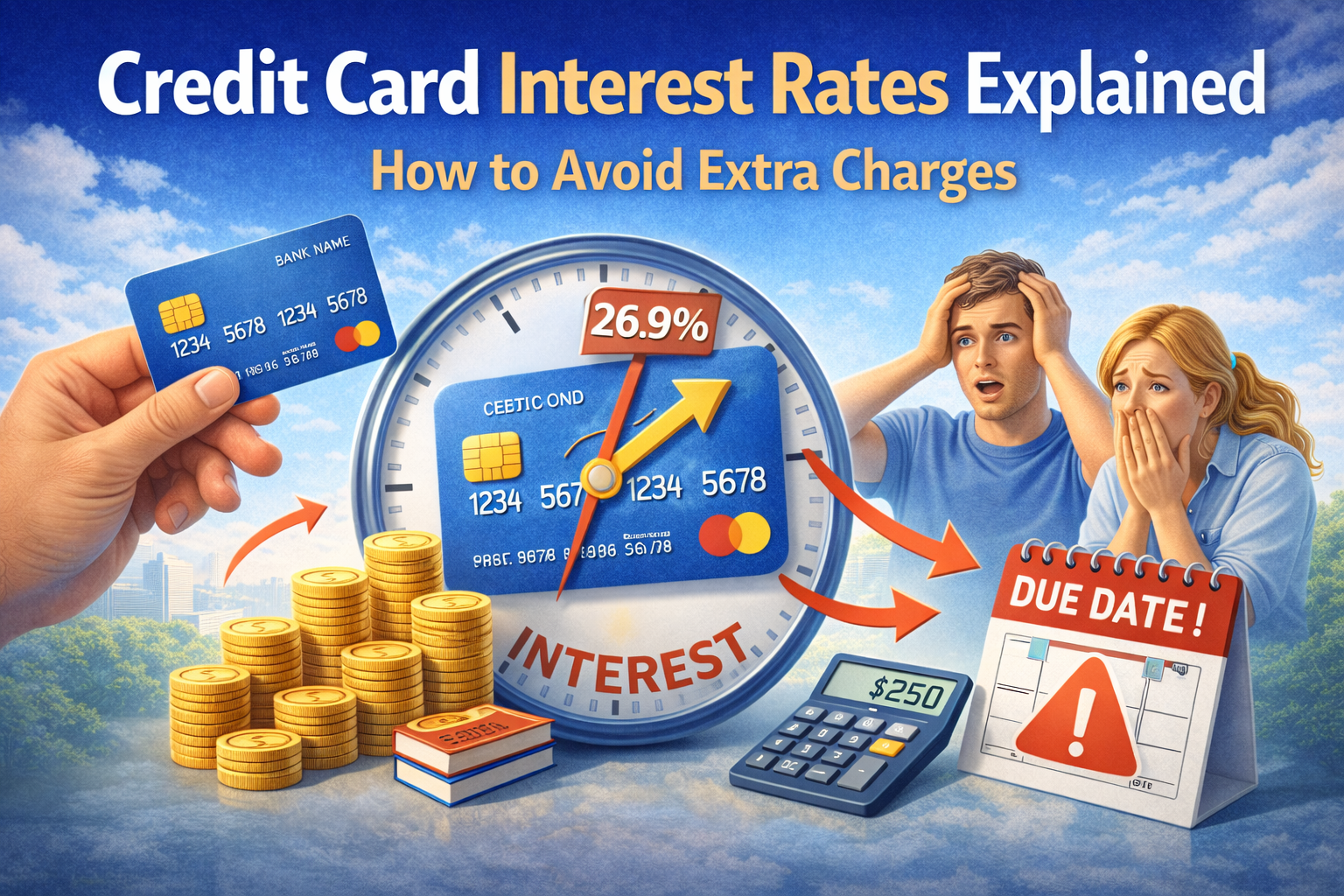
Credit cards are one of the most convenient financial tools available today. From online shopping and travel bookings to emergency expenses and reward points, credit cards offer flexibility and benefits. However, many users unknowingly lose money due to high credit card interest rates and hidden charges.
Understanding how credit card interest works is crucial if you want to avoid unnecessary debt, late fees, and extra charges. In this detailed guide, we will explain credit card interest rates in simple terms and share practical strategies to minimize or completely avoid interest payments.
What Is a Credit Card Interest Rate?
A credit card interest rate is the cost you pay to the bank or card issuer for borrowing money when you do not pay your full credit card bill on time.
This interest is usually expressed as an Annual Percentage Rate (APR), but it is charged daily or monthly on outstanding balances.
Example:
If your credit card APR is 36% per year, it roughly means:
- About 3% interest per month
- Applied on unpaid balances
How Credit Card Interest Is Calculated
Most credit cards calculate interest using the Average Daily Balance Method.
Step-by-step calculation:
- Your daily outstanding balance is recorded
- Daily interest rate = APR ÷ 365
- Interest is added daily
- Monthly total interest is billed
Simple Example:
- Outstanding balance: ₹20,000
- APR: 36%
- Daily rate: 36% ÷ 365 ≈ 0.098%
Even small unpaid balances can grow quickly due to compound interest.
Types of Credit Card Interest Rates
1. Purchase Interest Rate
Charged when you don’t pay the full bill for purchases like shopping, food, or services.
2. Cash Advance Interest Rate
Much higher than purchase APR and starts immediately—no grace period.
3. Balance Transfer Interest Rate
Often offered at a low or 0% introductory rate, but increases later.
4. Penalty Interest Rate
Applied if you miss payments repeatedly or exceed your credit limit.
What Is the Grace Period?
The grace period is the interest-free time between:
- The end of your billing cycle
- The due date for payment
If you pay your total outstanding amount within this period, no interest is charged.
⚠️ If you pay only the minimum due, interest applies to the entire balance.
Why Credit Card Interest Rates Are So High
Credit cards are unsecured loans, meaning:
- No collateral
- High default risk for banks
To compensate, issuers charge:
- High APRs (24%–48% annually)
- Penalty fees
- Compounding interest
This makes credit cards one of the most expensive borrowing options.
Hidden Charges That Increase Interest Burden
Many cardholders focus only on APR but ignore other costs:
1. Late Payment Fees
Missed payments can attract:
- Late fee
- Higher penalty APR
2. Minimum Due Trap
Paying only the minimum keeps you in debt longer and increases interest.
3. Over-Limit Fees
Exceeding your credit limit leads to extra charges and penalties.
4. Cash Withdrawal Fees
Includes:
- Upfront fee (2%–3%)
- Immediate interest (no grace period)
How to Avoid Credit Card Interest Completely
1. Always Pay the Full Amount Due
This is the best and safest rule.
✔ Pay total outstanding, not minimum due
✔ Avoids all interest charges
2. Set Up Auto-Debit
Enable automatic payment for:
- Total amount due
or - At least more than minimum
This prevents:
- Late payments
- Penalty interest
3. Avoid Cash Advances
Using a credit card to withdraw cash is expensive due to:
- Higher interest rates
- No grace period
Use debit cards or personal loans instead.
4. Understand Your Billing Cycle
Plan purchases early in the billing cycle to maximize the grace period.
5. Pay More Than the Minimum Due
If you can’t pay the full bill:
- Pay as much as possible
- Reduces principal faster
- Saves interest in the long run
Smart Ways to Reduce Existing Credit Card Interest
1. Convert Outstanding Balance to EMI
Most banks offer:
- Lower interest than revolving credit
- Fixed monthly payments
This is better than paying high APR every month.
2. Use Balance Transfer Offers
Transfer your balance to a card offering:
- 0% or low introductory APR
⚠️ Watch for:
- Transfer fees
- Higher interest after offer ends
3. Negotiate With Your Bank
If you have:
- Good credit history
- Regular income
You can request:
- Lower interest rate
- Fee waivers
How Credit Card Interest Affects Your Credit Score
High interest itself doesn’t hurt your score, but:
- High outstanding balance
- Late payments
- High credit utilization
These negatively impact your credit score, making future loans more expensive.
Credit Card Interest vs Personal Loan Interest
| Feature | Credit Card | Personal Loan |
|---|---|---|
| Interest Rate | Very high | Lower |
| Flexibility | High | Fixed |
| Best For | Short-term spending | Large expenses |
| Risk of Debt | Very high | Moderate |
👉 If you’re carrying long-term credit card debt, a personal loan may be cheaper.
Common Myths About Credit Card Interest
Myth 1: Paying Minimum Due Is Enough
Reality: It keeps you trapped in debt for years.
Myth 2: Interest Is Charged Only Monthly
Reality: Most cards charge interest daily.
Myth 3: All Cards Have Same Interest
Reality: Rates vary by issuer, card type, and credit profile.
Who Should Be Most Careful With Credit Cards?
- First-time users
- Students
- Low-income earners
- People with irregular income
For these users, uncontrolled spending can quickly turn into debt stress.
Best Practices for Responsible Credit Card Use
✔ Use credit cards like debit cards
✔ Spend only what you can repay
✔ Track statements monthly
✔ Avoid impulse purchases
✔ Keep credit utilization below 30%
Final Thoughts: Credit Card Interest Rates Explained Simply
Credit cards are powerful financial tools—but only when used wisely. High interest rates can silently drain your money if you don’t understand how they work.
The golden rule is simple:
Pay your full bill on time, every time.
By understanding credit card interest rates, avoiding common traps, and using smart repayment strategies, you can enjoy all the benefits of credit cards without paying extra charges.
Conclusion
Understanding Credit Card Interest Rates Explained: How to Avoid Extra Charges is essential for financial health in 2025. With discipline, awareness, and planning, you can turn your credit card from a debt trap into a financial advantage.